
Home » International business
Category Archives: International business

The Silence Syndrome: What Multinationals Get Wrong About Corporate Language
New research on corporate language, socialization, and the conditions under which knowledge actually transfers
Picture this: a U.S.-based subsidiary in Shanghai introduces “English-only Fridays” to encourage use of the corporate language. The result is not better communication. It is silence. Employees disengage, avoid conversations, and curtail the very knowledge-sharing the policy was designed to promote. Researchers have called this the “silence syndrome,” and it captures a problem that far too many multinationals encounter without fully understanding.
Our new study published in the Asia Pacific Journal of Management sets out to explain why corporate language mandates so often fail to deliver on their promise, and what organizations should do instead.

The policy versus the practice
The study draws on data from 132 subsidiaries of foreign MNEs operating in Jiangsu Province, China, representing parent firms from 22 countries across Europe, Asia, North America, and Australia. Its starting point is a distinction that sounds simple but has substantial implications: there is a meaningful difference between formally adopting a corporate language and actually using it. Most of the literature has treated these as the same thing. They are not.
The formal adoption of a corporate language, typically English, is a top-down directive. It specifies what language communication should happen in. What it does not do is ensure that the resulting communication is meaningful to those on the receiving end. Subsidiaries can comply with such policies on paper while the practical reality on the ground looks quite different, a phenomenon organizational scholars have called ceremonial adoption. Our data show that formal adoption is actually negatively associated with communication quality. The mandate, in other words, can make things worse before it makes them better.
The relevance problem
To make sense of this, the study applies relevance theory, drawn from linguistics, to the organizational context. The core insight is straightforward: for communication to be effective, recipients must perceive the information as relevant, which means it must be cognitively accessible and contextually meaningful, not merely linguistically comprehensible. A message delivered in a language you are uncomfortable with, about practices whose organizational rationale you do not fully grasp, does not transfer knowledge. It generates cognitive burden and communicative withdrawal.
This reframes the challenge for MNEs considerably. The question is not simply which language to use but whether the information being communicated lands as relevant to subsidiary employees. That depends on communication quality, on socialization, and on employees’ actual proficiency in the corporate language, and these three factors interact.
What the findings show
Three empirical findings stand out. First, while formal corporate language adoption does not directly improve communication quality, high-quality communication does significantly improve knowledge transfer. The practical implication is that MNEs need to invest in how information is conveyed, not just in which language it is delivered. Clarity, contextual fit, and directness matter. Expatriate managers in high-context environments like China need to tailor communication to local cognitive frameworks, not simply translate headquarters messages and transmit them downward.
Second, when host country nationals actually use the corporate language in their daily interactions, this generates higher levels of socialization, both formal and informal, which in turn drives knowledge transfer. The causal pathway matters: it is not language use per se that helps transfer knowledge, but the social interactions that language use opens up. Joint meetings, cross-national teams, shared training programs, socializing during and outside working hours are the mechanisms through which knowledge becomes meaningful and transferable. Importantly, socialization substitutes to some extent for high-quality formal communication. Subsidiaries with rich socialization depend less on the clarity of formal channels because informal interaction fills in the contextual gaps.
Third, and perhaps most counterintuitively, language proficiency moderates these processes in ways that complicate the standard managerial prescription. The socialization pathway is most important precisely in subsidiaries where proficiency is lower. Where employees struggle with the corporate language, face-to-face interaction and deliberate socialization become more, not less, critical. Waiting until proficiency improves before investing in socialization is the wrong sequence. The research also finds that a high level of proficiency is not a prerequisite for effective knowledge transfer; employees can engage productively through socialization even with imperfect command of the corporate language.
What this means in practice
For MNEs operating across significant linguistic and cultural distance, these findings reframe the managerial task. Language training remains valuable, but it should be designed around high-relevance, practically grounded skills rather than formal proficiency benchmarks. More importantly, organizations need to build the social infrastructure through which language becomes a vehicle for shared meaning rather than a barrier to it. In the Chinese context specifically, this means attending to guanxi, to the development of personal relationships between expatriates and host country nationals, and to the creation of deliberate opportunities for interaction that bridge the in-group/out-group dynamics that can otherwise shut down knowledge exchange.
The broader lesson is simple but easy to overlook. A language mandate tells employees what to speak. It cannot, on its own, ensure they are actually heard.
Read more: Mockaitis, A.I., Tan, J., Zhu, J., Zhu, C.J., & Chen, Z. (2026). Corporate language and knowledge transfer in MNE subsidiaries: A relevance lens. Asia Pacific Journal of Management. https://doi.org/10.1007/s10490-025-10063-z

Understanding Openness to Change among Lithuanian Generations
VALUEHOST is a three-year research project funded by the Lithuanian Research Council. We explore changing Lithuanian values, with a focus on emigrants and their experiences in their host countries. In this post, I introduce some interesting findings from one of our studies on changing values at home.
We have analyzed data between the years 2010-2020, from the European Social Survey database on individuals’ values. In this study, we were interested in exploring whether values can change in the short term. Scholars have long held that values are enduring, and that they are very slow to change. In societies, this change would be steady, and progressive over generations. Typically, we notice these differences by comparing our own values with those of our parents’ generation.
But much of the research on values change has been in the context of relatively stable advanced economies. Generations here have labels which we all know: Baby Boomers, Gen X, Gen Y, etc. Societies in the former USSR, though, have had different social, political, and economic transformations. Their process of modernization has been quite different.
In our study, we distinguish between generations which we link to political eras. People who grew up in these different eras in Lithuania acquired their values during vastly different historical periods. Some periods were more turbulent than others. We label them the Stalin generation for individuals born before 1945. The Soviet generation includes those born between 1945 and 1969. The late Soviet generation comprises those born from 1970 to 1989. The Independent EU generation includes individuals born after 1989. One of our aims was to compare the values of these different political generations to one another and over time.
Here we look at one of the results on Openness to Change values, derived from the work of Shalom Schwartz. This is a measure that combines three personal values: self-direction, stimulation and hedonism. Self-direction encompasses the extent to which individuals value independence in thought and action. Stimulation reflects how much people value excitement, novelty and challenges in life. And hedonism refers to the pursuit of personal pleasure or immediate gratification.
We compared six rounds of surveys across more than 11,000 individuals, starting in 2010, and every two years thereafter.

In the figure, we can see that openness to change appears to fluctuate over the years. Some generations are quite similar, but one stands out – the Independent EU generation. These are individuals, who, at the time of the survey, were between the ages of 18 and 30. For the other generations, openness to change declines slightly but increases over time by survey round 10 in 2020. We see the opposite in the youngest generation. Here, openness to change declines steadily over the years. In the final survey round, there is a slight increase. But overall, openness to change has declined for this generation during the 10 years up to 2020.
We would be interested in hearing your thoughts about why this has happened.

Narcissistic CEOs: Strategies for Entrepreneurial Success

Our latest article has just been published in the International Small Business Journal. Have you ever worked with someone who is at times charismatic and charming and at other times nitpicky, controlling and lacking in empathy? A coworker or manager who likes to brag about themselves, their achievements, successes and ambitions to be the best of the best, yet is also often insecure, envious, and manipulative? They instigate office drama and act as the center of attention. They crave glory. They are difficult to work with yet have their superiors, clients, and partners charmed. That coworker or boss likely has narcissistic tendencies.
Our study focuses on CEOs with these types of personality traits.
We analyze the tendencies of narcissistic CEOs to engage in acquiring, developing, and protecting resources. We examine how these behaviors translate to fulfilling their grandiose entrepreneurial strategies. Essentially, narcissistic CEOs are resource hogs. This helps them weather uncertain times, and when threatened, they are further activated to try (and succeed at their) innovative, proactive, and risky strategies.
“It’s all about resources: Narcissistic CEOs and entrepreneurial orientation during disruptions” by Richa Chugh from the Victoria University of Wellington, Audra I. Mockaitis from Maynooth University, Stephen E. Lanivich, University of Memphis, and Javad E. Nooshabadi, Maynooth University, was published in September, 2024.
The article is FREE to access: https://doi-org.may.idm.oclc.org/10.1177/02662426241269774
We would be interested to hear your thoughts about our publication.
Explore the Elgar Encyclopedia of Cross-Cultural Management

The Elgar Encyclopedia of Cross-Cultural Management is available now! Access the first chapter and introductory content for FREE here.
The Elgar Encyclopedia of Cross-Cultural Management, edited by Professor Audra I. Mockaitis (Maynooth University) and Professor Christina L. Butler (Kingston University), is the first reference book of its kind in the field. The book reflects the eclectic and interdisciplinary nature of cross-cultural management. It includes entries from scholars in cross-cultural psychology, business and management, anthropology, linguistics, sociology, and political science. These contributions form a collective discourse about the evolution and trajectory of the field. Authors present a range of perspectives, theories, and concepts. They challenge traditional paradigms. Together, they offer new multi-paradigmatic explanations to cross-cultural phenomena. Suitable for scholars, students and practitioners, the collection presents the state-of-the art in the cross-cultural management field.
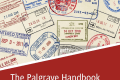
The Palgrave Handbook of Global Migration in International Business
I have recently published a new book.

The Palgrave Handbook of Global Migration in International Business (Audra I. Mockaitis, Ed.) presents novel research on various migration issues in the field of international business. The anthology contains 24 chapters, organized on five key themes representing perspectives and challenges borne by global migration within societies, firms, and individuals. Collectively, the authors examine global migration via the international business lens and present theoretical and practical solutions to a global grand challenge that is rapidly increasing in importance.
The five key themes of the book are:
Theme I: Migration Landscapes in International Business
Theme II: Navigating the Terrain of Language and Culture
Theme III: Leveraging and Managing Migration in the International Firm
Theme IV: Migrants as an International Business Resource
Theme V: The Migrant’s Journey
The book is written for a wide audience;. Researchers, scholars, international business professionals, policymakers, government organizations and NGOs working with migrants (refugees, skilled and unskilled immigrants) or migration issues, students and readers with a general interest in global migration-related topics will find something of interest in the book. The 59 authors are all experts in their fields and all conduct research on migration issues. Notably, while the authors reside in and represent various institutions in twelve countries, many of them are migrants themselves and have first-hand experience of many of the issues presented in the book.
See the Publisher page for more information and to download free sample chapters.
Interested in this book? Available to buy on:



The Book is available in Hardcover (ISBN : 978-3-031-38885-9), Softcover (ISBN: 978-3-031-38888-0) and eBook (ISBN: 978-3-031-38886-6).
 Professor Audra I. Mockaitis